Medicine Safety
The Link Between Off-Label, Slow-Acting, and Dose

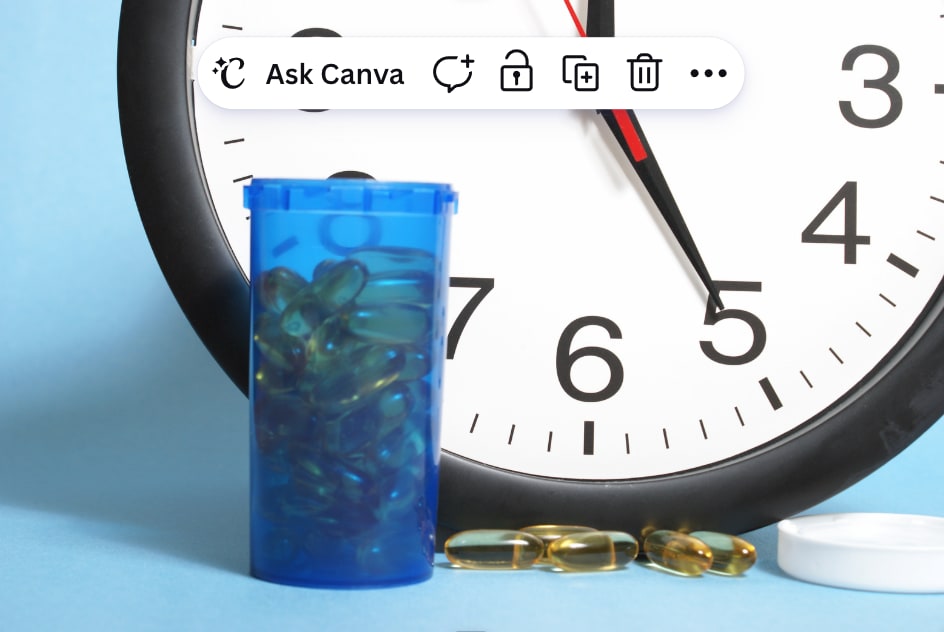
In medicine, the terms off-label, slow-acting, and dosage are familiar names on their own, but there is an unrecognized link between these three terms which explains how in recent years much of what has gone wrong with the public conversation about certain medications and their use.
When a drug is approved by the Food and Drug Administration (FDA), it is approved for a specific application, the disease or condition for which the drug was tested in the trials that led to the FDA approval. The drug company submits years of data showing that the medication is safe and effective (in theory) for that particular use, the FDA reviews the data, and the FDA approves the drug for that one use. The package insert, which comes with a prescription, lists that one condition for which the drug was approved by the FDA.
Using the same drug for a different condition is what is called off-label use. The drug has not been formally evaluated by the FDA for any indication except the condition for which the FDA received an application. It does not mean the drug is untested, unsafe, or unstudied. It means the FDA’s specific stamp of approval does not extend to that particular use. There is often substantial published literature, decades of clinical experience, and broad professional consensus supporting the off-label use. At times there is more scientific literature or medical experience supporting an off-label use of a drug than supports the FDA-approved indication.
Off-label prescribing is not rare. Roughly one in five prescriptions written in the United States is off-label. Many entire fields of medicine—pediatrics in particular—rely heavily upon off-label use because drug trials are rarely conducted on children. Hence pediatricians have to extrapolate from adult studies to prescribe many drugs in children. If off-label meant unsafe, half of pediatric medicine would be malpractice. Off-label is a regulatory category, not a clinical judgment and by no means indicates lack of safety or effectiveness.
The reason most off-label uses never become approved by the FDA is economic. By current estimates, running a drug through the FDA approval process costs one to three billion dollars. Adding a new indication to an existing drug can require millions of dollars in new clinical trials because, unfortunately, the FDA does not accept existing clinical experience as a substitute for randomized controlled trial data.
Once a drug’s patent has expired and generic manufacturers can produce it freely, no drug company has any reason to invest in seeking approval for a new use of a medication. Any generic manufacturer could sell the same drug for the same new use as soon as the patent expired. So, drugs that have proven useful for many years of clinical practice often remain officially off-label indefinitely, not because they are not safe and effective but because no one is willing to file the paperwork or spend the money to get approval for a generic drug other pharmaceutical companies can produce cheaply.
The FDA is a regulatory body, but its decisions about what gets approved and what does not are shaped by political and economic pressures more than science. This is not a conspiracy. It is the predictable consequence of a system in which approval is expensive, evidence has to be packaged in a particular way, and the drug company gathering the evidence has to be able to see a future profit. The line separating approved drugs as opposed to off-label drugs is a direct result of the economics of pharmaceutical development, not the safety or effectiveness of the drug.
Misoprostol (trade name Cytotec) is a good example of this approval problem. Misoprostol is a synthetic version of one of the body’s own prostaglandins. Prostaglandins are small signaling molecules that the body produces in many tissues to coordinate a wide range of activities, including inflammation, blood vessel tone, blood clotting—and the onset of labor. The body’s own prostaglandins involved in labor are primarily prostaglandin E2 (PGE2) and prostaglandin F2-alpha (PGF2-alpha). They are produced by the membranes surrounding the baby and by the lining of the uterus, and they do two things: they soften and thin the cervix in preparation for delivery, and they cause the uterine muscle to contract. Prostaglandins are how the body starts labor on its own, naturally.
The FDA approved Cytotec in 1988 for the prevention and treatment of gastric ulcers caused by nonsteroidal anti-inflammatory drugs (NSAIDs such as aspirin and ibuprofen). That is the only FDA-approved indication for misoprostol. To this day, the official label says nothing about the use of misoprostol in pregnancy or labor.
Misoprostol is a synthetic version of prostaglandin E1 (PGE1), modified slightly so it can be taken orally and so it has a useful duration of action. It binds to the same prostaglandin receptors that the body’s own prostaglandins bind to and it produces the same effects on the cervix and the uterus. So, when misoprostol is used to induce labor in a pregnant woman, it is not introducing some foreign chemical into her body. It is providing a small dose of the same signaling molecule the body would otherwise have produced on its own. It is mimicking the body’s own labor-onset cascade.
While misoprostol is officially indicated for stomach ulcers, it is, in practice, one of the most useful drugs in obstetrics for cervical ripening, labor induction, treatment of postpartum hemorrhage, and management of miscarriage. It has been studied in tens of thousands of women across hundreds of trials. The American College of Obstetricians and Gynecologists (ACOG) explicitly endorses its use of 25 micrograms for cervical ripening and induction. None of that has resulted in an updated FDA label because the patent on misoprostol expired long ago and no manufacturer has any economic reason to pay the FDA to add a new use for misoprostol. Hence the drug remains “off-label” for use in labor and delivery even though the drug has become a primary component of clinical labor and delivery. This says a lot about the FDA regulatory mechanism. It says nothing about whether the drug works safely. However, clinical experience assures safety and efficacy.
There is one more piece of the Cytotec story worth knowing. A single 25-microgram dose of misoprostol costs roughly fifty cents—sometimes less. A standard hospital induction of labor, depending upon the institution and the length of labor, can run anywhere from several thousand to fifteen thousand dollars or more. In my own outpatient practice, a careful induction with monitoring costs about $125. The drug itself is one of the cheapest interventions in obstetrics. The expense of an induction is in the building, the staff, the bed, the nurses, and the monitoring—not in the medication.
The cost matters, because part of the resistance to off-label uses of inexpensive drugs is structural. There is no advertising budget for a fifty-cent dose. There is no sales representative bringing lunch to your office. There is no manufacturer-funded continuing education campaign. So, clinicians often hear far more about expensive proprietary alternatives than about the cheap generic equivalent, even when the cheap option works just as well or better. This is not the drug’s fault, but it does have a significant effect on which drugs get used and which do not.
Now to the second misunderstanding about misoprostol. Some medications take a long time to work. Misoprostol is one of them. A 25-microgram dose, placed in the vagina, swallowed, or under the tongue, works slowly. Over several hours, the cervix softens slowly. Contractions, if they come, may not start for six or eight hours and may not become established until ten hours later. This is normal. This is the drug working the way the natural prostaglandins work.
The problem in hospital practice has been impatience. A nurse gives 25 micrograms, watches for an hour or two, sees nothing happening, and gives another 25. Another hour or two passes, still no contractions, and a third dose is given. By the time the first dose finally takes effect, three doses are stacked in the body, and what should have been a gentle, slow onset of labor becomes a uterine emergency (hyperstimulation) with severe contractions that do not let up, fetal distress, and sometimes uterine rupture. The drug gets blamed, but the repeated dosing and the impatience behind it is the actual cause of the hyperstimulation.
Some hospitals in earlier years pushed the dose even higher, giving patients 100 micrograms every two hours. That is four times the safe dose and three times the frequency. The harms that resulted produced the bad reputation that misoprostol carries in some quarters today. But the drug at a 25 microgram one time dose, used patiently, is one of the safest induction agents available. The drug did not change. The doctors and nurses changed the dosage, and even today the usual present-day dosing is still excessive.
The reason this story is so frustrating is that we should have learned the lesson decades earlier from a different drug. In the 1950s and 1960s, oxytocin (trade name Pitocin) was given with small tablets placed in the buccal area, the soft space between the cheek and the gum. There, the tablets dissolved slowly and were absorbed through the lining of the mouth. This method of administering oxytocin was called “Buccal Pit.” The Buccal Pit administration of oxytocin had exactly the same problem as misoprostol would later have. The period for the medication to take affect (called the latent period) was long. The absorption was slow and variable. A patient who showed no response to one tablet often received another, and then another. By the time the cumulative dose finally took effect, the patient had a mouthful of dissolving oxytocin tablets and went into outrageous, dangerous contractions, sometimes producing fetal distress or uterine rupture. The Buccal Pit method of administering oxytocin was eventually abandoned in favor of intravenous oxytocin which could be titrated minute by minute and rescinded (the medical word for stopped). So, we eventually learned the lesson of latency, but the hard way.
The lesson of Buccal Pit was that slow-acting medications with long latent periods require patience and a careful protocol. Repeatedly giving doses while waiting for an effect is dangerous. The same lesson was available to anyone who cared to learn it when misoprostol arrived two decades later. Some of us learned it. Many did not, and the same mistake was repeated with the same consequences. Some lessons we do not learn the first time. Some lessons we apparently do not learn the second time either.
Five hundred years ago, the Swiss physician Paracelsus articulated what is still the founding principle of toxicology and pharmacology. He wrote that all substances are poisons and that the dose alone makes a medication not a poison. Said more simply, any substance can be a medicine and any substance can be a poison. The difference is the dose.
Water can kill you in sufficient quantity. Oxygen at high concentrations damages the lungs. Vitamin A taken in massive doses can cause fetal defects (teratogenic). Tylenol (acetaminophen) easily damages the liver, and ibuprofen (Motrin, etc.) damages the kidneys. Drugs that produce miracles at one dose produce disasters at another. This is the bedrock of our assumptions about medication safety. And yet in the public conversation about specific drugs, misoprostol included, the dose almost never enters the discussion. A drug is treated as if it were a fixed thing with a fixed effect, and the question of whether it is good or bad is debated as if the dose were an unimportant detail, irrelevant. The dose is not a detail. The dose is the central question.
Misoprostol at 25 micrograms is a careful, useful, inexpensive obstetric medication that mimics the body’s own labor-onset cascade. Misoprostol at 100 micrograms every two hours, given by hospital staff that do not understood the latent period in medications, is a uterine and fetal catastrophe waiting to happen. These are not two characteristics of the same drug. They are the same drug used in two different ways, and the consequences depend almost entirely on which way, the dose.
Off-label use of a medication is looked upon as if it were unsafe or irregular. It is not. It is how much of medicine actually works. Long latent periods are considered medication failures. They are not. Long latent periods are how slow-acting (normal) drugs behave, and the right response is patience, not repeated dosing.
Drugs are treated as if they have fixed identities. They do not. The same compound at different doses is, for all practical purposes, a different drug. The dose makes the poison and the dose, used correctly, makes the medicine.
These three misunderstandings (off-label, slow acting medications, and dose) taken together, produce a public conversation about certain medications that is misleading. A drug is blamed for being used off-label when off-label simply means no one paid to file the paperwork for an FDA review. The same drug is blamed for hyperstimulation which resulted from overdosing during a misunderstood latent period. The same drug is then dismissed entirely, when at the right dose and the right interval it would have been one of the safest and most useful and least expensive interventions available. Each misunderstanding compounds the others, and the cost is borne by patients who do not get the inexpensive, effective and safe medication they should have, or who get it administered by people who do not understood how it works.
The remedy is not complicated. Understand what off-label actually means. Understand that some drugs take time to work and that patience is part of the prescription. Understand that the dose is the whole story, that no drug is safe in any dose and no drug is dangerous in every dose. Paracelsus knew this five hundred years ago. We forget it about once every generation, and then we have to learn it again.